
Stories
Why Systems Change is Good For You and Why It's More Achievable Than You May Think…
30/9/26
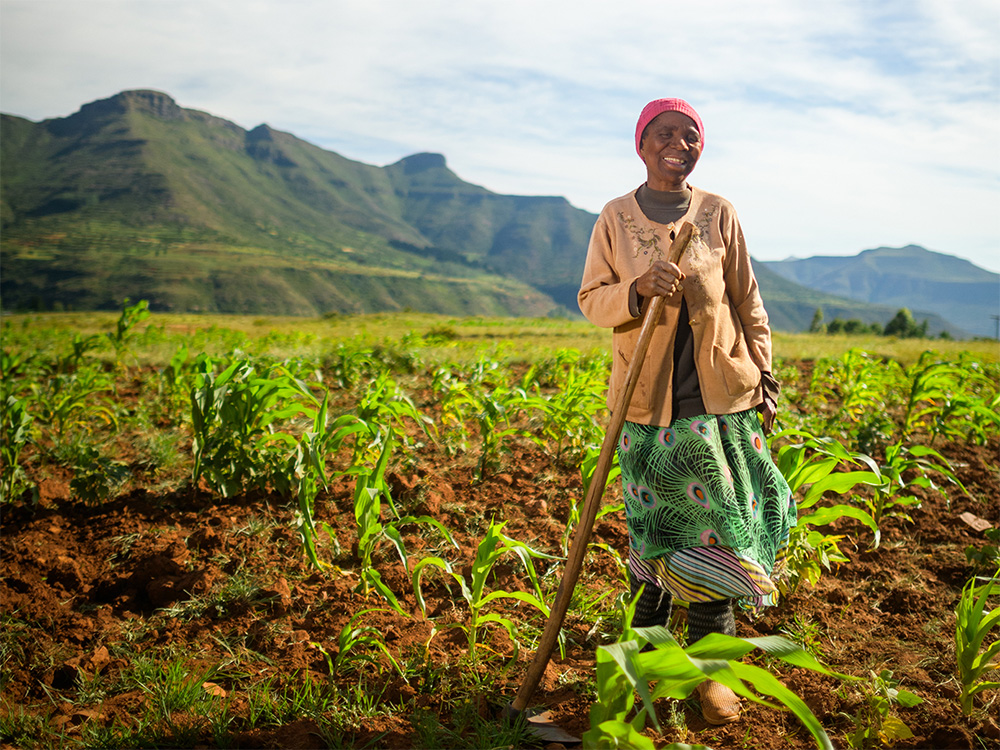
Photo: wilpunt / iStock
Earlier this month we launched a new paper looking at why systems change is needed to end loss and damage from climate change, and importantly —how we can drive systems change.
We hope you are finding it useful and are as excited as we are about our new work stream (more on that later). But for some, we very much appreciate that systems change might feel more than a little un-achievable right now given our current geo-political situation. In fact we have our moments of doubt too.
When that little voice in your head starts saying…
“How can we possibly change things in the midst of a cost of living crisis when world leaders seem to be increasingly focused on geopolitical saber-rattling that seems to be inching us ever closer to a world war.”
That's why in this blog we wanted to give you eleven reasons to stay strong and stay hopeful based on the findings of our new paper. First by sharing seven reasons why systems change will be really good for you, and second, by letting you know about four reasons why systems change is more achievable than you might think.
Seven reasons why systems change will be really good for you
Our new paper tells us that in order to end ecological overshoot of the planetary boundaries (e.g. climate change and bio diversity breakdown) and address the many social shortfalls we face (e.g. food and water insecurity), we will need to tackle the root causes and drivers of these things. This will involve:
- Ending our dependence on economic growth;
- Working less and valuing care more;
- Ending the hegemony of Global North Science, knowledge, and expertise;
- Restoring our reciprocal relationship with more-than-humans (e.g. plants, animals, fungi, the atmosphere);
- Expanding rights to more-than-humans and criminalising ecocide;
- Rethink reparations; and
- Thinking seven generations into the future.
Now apart from the obvious benefits of putting an end to climate change disasters, ensuring the ozone layer remains intact, and cleaning up chemical pollution, these changes are going to be really good for you on a personal level. Here are seven reasons why:
- Ending growth means better health and wellbeing: “Green growth” is not possible. Moving away from economic growth towards reducing consumption and regenerative and distributive economic activity is the way to go. This is great news for your health and wellbeing, because rather than it being something that is eventually improved as economic benefits trickle down to you, it will be placed at the center of all economic activity. By centering Indigenous concepts including relationality and reciprocity and implementing degrowth policies and circular economies (e.g. Doughnut Economics), power, wealth, and resources will be redistributed toward social and ecological well-being.
- Working less means more time for the things and people you care about: Reducing working time is necessary to decouple work from growth and decrease our structural dependency on growth as a means to create meaningful work. Studies have shown that reducing working time without a loss of salary or forced flexible working has significant benefits for well-being, mental health, and productivity, particularly by lowering stress and increasing time for sleep and exercise. It has also been shown to increase job and life satisfaction and time with family.
- Truly valuing care means an end to gender inequality: Recognising the true value of care is a crucial component of transitioning to a post-growth society. Given a monetary value, unpaid care work would exceed 40 percent of GDP in some countries. If this work were compensated, it would represent 9 percent of global GDP —equivalent to 11 trillion USD. Globally, women shoulder more than three quarters of unpaid domestic and care work, an inequitable distribution that is one of the root causes of gender inequality. By recognising the true value of care and distributing care more fairly within the household, women will face significantly less discrimination.
- Ending the exclusion of Indigenous Knowledge means more solutions: Across the world the Indigenous and traditional cultural practices of sufficiency, care, commoning, sustainability, reciprocity, and multi-species justice continue to be erased. This is negatively impacting your health and wellbeing by excluding knowledge and practices that offer solutions to ecological overshoot and addressing social shortfalls. Instead, by ensuring that these knowledges and practices are able to change, enriching, complement, and challenging Global North science, we will be better able to tackle the root causes and drivers of things that have significant health impacts such as heatwaves, food and water stress, and air pollution.
- Changing our relationship with nature means a better mental and physical health: (Re-) turning to stewardship and kinship to restore our reciprocal relationship with more-than-humans is key to addressing many of the root causes of ecological overshoot including biodiversity loss. This will involve taking responsibility for the well-being of both human and more-than-human communities and treating more-than-humans as extended family members and living ancestors rather than as resources. By increasing the time you spend in the company of more-than-humans, kinship and stewardship will also increase your physical and mental well-being.
- Rethinking reparations means justice and equity for all: By rethinking reparations as a future-oriented project, reparatory justice can serve as a tool to build just and equitable systems that can end ecological overshoot and address social shortfalls for all. This will involve tax and debt trade justice that will unlock trillions of dollars a year that can be spent on delivering quality public services, including health care, social care and education, and delivering low and zero cost water, electricity, internet, and public transport.
Thinking seven generations ahead means safety and security for your children and great-great-great-great-grandchildren: Indigenous principles such as the Haudenosaunee Peoples’ Seventh Generation value and the principle of intergenerational equity urge current generations to live in a manner that future generations can still meet their needs, enjoy human rights, and thrive. By ensuring that no decision is taken without first considering how it might affect the ecological safety and social justice of future generations you will no longer have to worry about the world your children —and your distant future relatives— will inherit.
Four reasons why systems change is more achievable than you may think…
Change is not just more achievable that you may think, it's already happening! Here are four reasons why:
- The 3.5 percent rule: Non-violent protests are twice as likely to succeed as armed conflict, with those engaging 3.5 percent of the population having almost never failed to bring about change. In fact, most successful non-violent protests brought about change with less than 3.5 percent of the population participating. What's more, those that participate in protests are only the tip of the iceberg of public support. So yes, the “people united, will never be defeated!”
- Positive tipping points: Researchers tell us that only 20-25 percent of a population is typically required to reach a positive tipping point and that these positive changes to human social behaviour can come together to create a tidal wave of change. They give the example of Norway, where progressive policies have made electric vehicles cheaper than petrol cars, resulting in 98.4 percent of new passenger cars registered in April 2026 being electric vehicles.
- Coalitions of the willing: Multilateralism may be on life support, but small groups of willing countries are not waiting for change —they are being the change they wish to see. Multiple examples of plurilateral action already exist, including the Conference on Transitioning Away from Fossil Fuels, Climate Club, Bridgetown Initiative, the Climate and Clean Air Coalition (a coalition of countries taking steps to cut black carbon), the North Sea Power Hub, and the Electrify Now initiative. These coalitions can move faster, test practical solutions, and build momentum, creating a “race to the top” on ending overshoot of the planetary boundaries and addressing social shortfalls like the health impacts of air pollution.
- A collective vision for the future: Across the world people are coming together as participants of citizens' assemblies and other types of deliberative democracy to create collective visions for the future and recommendations on how to get there. At the same time people are being exposed to what life under a new system might feel like. For example, through trials of the four day week, people have been able to feel the personal benefits —such as more time with family— that systems change would bring. This is important, because a collective vision for the future that allows people to appreciate what personal benefits they can expect from transformation can play a significant role in driving systems change. It also helps people to recognise the power of their own agency.
So, all of this is to say there are reasons to be hopeful and to encourage you to join us as we embark on an ambitious new workstream!
Introducing a new workstream
This new paper and its findings mark the beginning of an important body of new work for the Loss and Damage Collaboration (L&DC). In a previous brief, we laid out our five-year vision for responding to loss and damage caused by climate change under the United Nations Framework Convention on Climate Change (UNFCCC). In a subsequent paper we presented a “mosaic of solutions” that can meet the Loss and Damage needs of the Global Majority while building long term resilience and advancing sustainable development.
In the latter, we concluded that systems change will be needed for all humans, ecosystems, and species to thrive, not just survive, in the midst of climate change and other planetary challenges. Therefore, we are very pleased to announce the launch of a new workstream, one that aims to drive the systems change needed to end loss and damage from climate change. The aim of this workstream is two fold:
- To consider what systems change entails; and
- To identify what opportunities there are to advance it.
But, rest assured, we are not giving up on ensuring robust progress under the UNFCCC. On the contrary, we intend this work to stimulate an important discussion within Loss and Damage negotiations about how structural inequalities are preventing outcomes that can lead to real transformation and why without addressing the root causes and drivers of ecological overshoot and social short fall, action on loss and damage will always fall short of the transformative changes needed.
For more information on how to collaborate with us on this work reach out to us via: info [@] lossanddamagecollaboration.org

Read the full text here:

Read the full text here:

Watch the video here:
The development of this work has been supported by Rosa-Luxemburg-Stiftung New York Office with support from the German Ministry for Economic Cooperation and Development (BMZ).
This publication is the sole responsibility of the publisher. The positions expressed herein do not reflect the views of the funding agency. The publication is distributed free of charge and may not be used for electoral campaigning purposes. We also note that any views expressed and any errors are the responsibility of the authors alone, and that the content of this brief does not necessarily represent the views of all members of the Loss and Damage Collaboration (L&DC).