Mosaic of solutions
To respond to loss and damage, while enabling developing countries to build long term resilience and achieve the Sustainable Development Goals (SDGs), a fit for purpose “mosaic of solutions” must be catalysed both inside and outside the United Nations Framework Convention on Climate Change (UNFCCC). One that:
- Prevents loss and damage: By enabling climate change mitigation and facilitating a just transition that limits global warming to 1.5°C, ensuring the protection of ecosystems and scaling up sustainable development to achieve the SDGs.
- Reduces loss and damage: By properly funding and implementing climate change adaptation, disaster risk reduction (DRR), preparedness, early warning systems, and anticipatory action while ensuring universal social protection.
- Addresses loss and damage: By scaling up and properly funding:
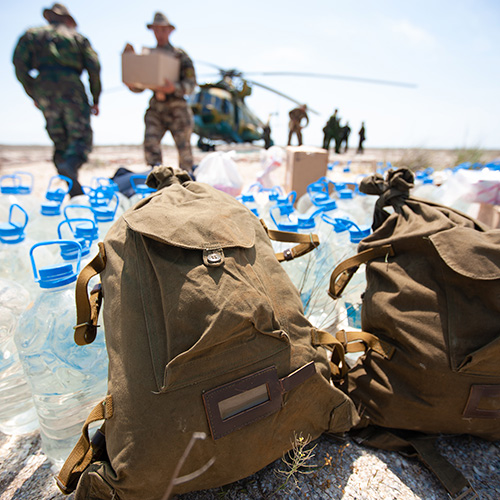
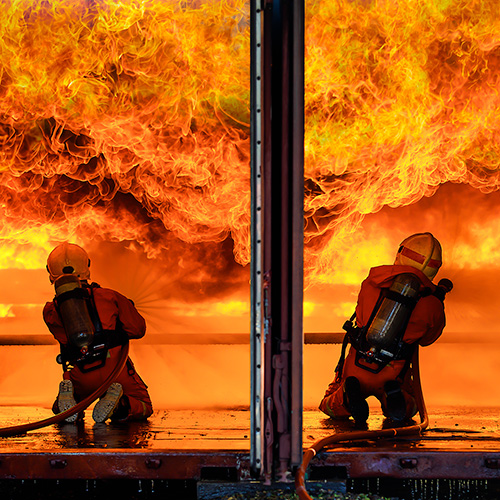
- Immediate response (within hours, days, and weeks) by humanitarian actors that provide emergency health care, shelter, and food that saves lives.
- Mid term response (within weeks and months) by the Fund for Responding to Loss and Damage (FRLD), United Nations (UN) agencies, and other partners, including philanthropy, to prevent and reduce further harm to livelihoods, food systems, health, culture, infrastructure, and more.
- Sustained long-term response (over years and decades) to recover lost development, build back better, ensure long term risk reduction and management and resilience building, and guarantee remedy —and where required— reparations.
- Ends disenablers of loss and damage response: By facilitating debt cancellation, reforming trade rules to be fair and prioritise suitable development, reclaiming lost tax revenue, and making the international financial architecture accessible and equitable.
In a previous brief, we laid out our five-year vision for Loss and Damage under the UNFCCC, which stressed the importance of strengthening the functions of the Warsaw International Mechanism for Loss and Damage (WIM) and fully resourcing its Santiago Network and the Fund for Responding to Loss and Damage (FRLD). While we continue to strive to ensure progress under the UNFCCC, this new workstream will focus on catalysing “a mosaic of solutions” that can both meet the scope and scale of the needs of developing countries and frontline communities.
Team Members
TEO ORMOND-SKEAPING
Teo (he/him) is an award winning artist, filmmaker and photographer working on projects relating to political ecology, Loss and Damage, climate-induced migration and displacement, Slow Violence and the political and cultural critique of the Anthropocene.

ERIN ROBERTS
Erin (she/her) is a climate policy researcher who has worked on both adaptation and Loss and Damage, with a particular focus on supporting developing countries in the UNFCCC negotiations. She has degrees in biology, international relations and international development with a PhD on the way in which leadership shaped the evolution of Loss and Damage policy in Bangladesh. Erin continues to ponder the role of leadership in scaling up climate action on all fronts. In every aspect of her work she endeavours to empower young climate leaders from the Global South including through her role supporting the amazing team at the Climate Leadership Initiative.
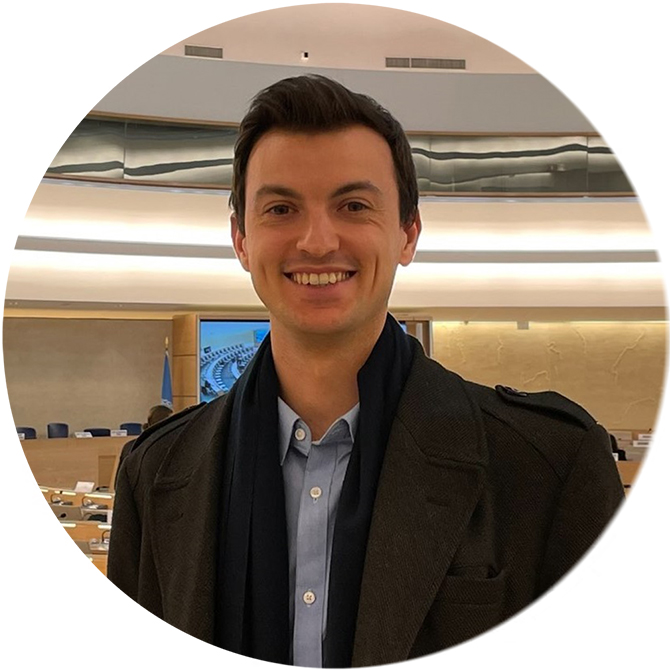
Nicolas Gaulin
Nicolas (he/il) is a social scientist working on Loss and Damage and the energy transition, having published several papers on the issue. As engagement lead, he supports the L&DC's communications strategy, develops content and engages with partners to ensure a unified voice on ambitious Loss and Damage action. He is also a global coordinator with the Loss and Damage Youth Coalition and sits on Youth and Environment Europe's Youth Scientific Advisory Board.
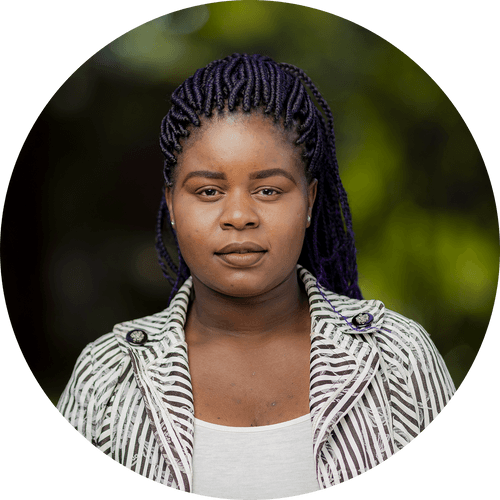
BRENDA MWALE
Brenda (she/her) is a climate change advocate with more than eight years of experience in policy advocacy, community engagement, partnerships, climate education, and intergovernmental processes. She is currently a negotiator for Malawi on Loss and Damage and coordinates the Finance Working Group of the Loss and Damage Collaboration. She has expertise in gender and youth mainstreaming and engagement. Brenda is also a farmer and uses the platform to advocate for sustainable food systems.

MALEK ROMDHANE
Malek Romdhane is a climate policy expert, researcher, and UNFCCC youth negotiator on climate adaptation, a Loss and Damage Fellow of the New Generation Program, a graduate of the UN Geneva Graduate Study Programme on SDGs and Agenda 2030, and currently leads the Adaptation Project within the Loss and Damage Collaboration.