
Publications
Invisibilized displacements
25/5/26
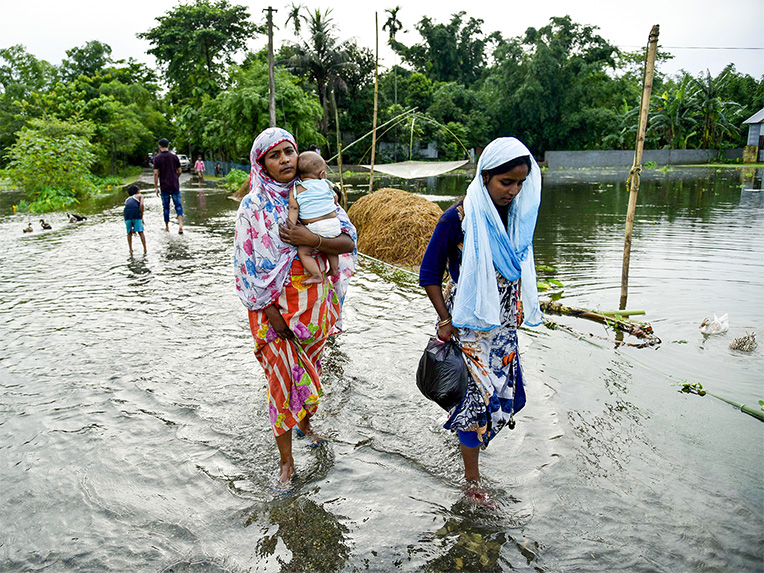
Assam, India. 12 July 2019. People wade through flooded road at flood effected Kalgachi in Barpeta. People wade through a flooded road in flood-affected Kalgachia, Barpeta district, Assam. Photo: Talukdar David
Climate-related displacements can lead to the loss of a sense of (in)security. Often, the lack of acknowledgement of the losses by the State lead to a deep sense of abandonment among the affected communities, imposing invisibilities. These are invisibilised displacements that are left out of formal structures of governance. Invisibilised displacements exist because they are deliberately made invisible by power structures like the State and exacerbated by Media, absolving their responsibility and accountability; underlining historic continuities of violences compounded by slow and lesser spectacular effects of climate change. The article is based on my doctoral research and professional experiences with erosion-displaced and self-rehabilitated communities in Assam, India, for nearly two decades. I argue that the concept of Invisibilised Displacements repoliticises climate-related displacements by framing the condition of being unseen not as accidental neglect but as the result of systemic erasure. It does so by pushing for the acknowledgement of slow, long-lasting, collectively lived invisibilities of communities, by shifting the gaze from the injured communities to the perpetrators in a way that facilitates the former’s agency and refusal to being invisibilised, and by guiding us in comprehensively recognising the powers that create this invisibilisation and holding them accountable.

Read the full text here:

Read the full text here:

Watch the video here: