
Stories
Another World is on Her Way
22/9/26
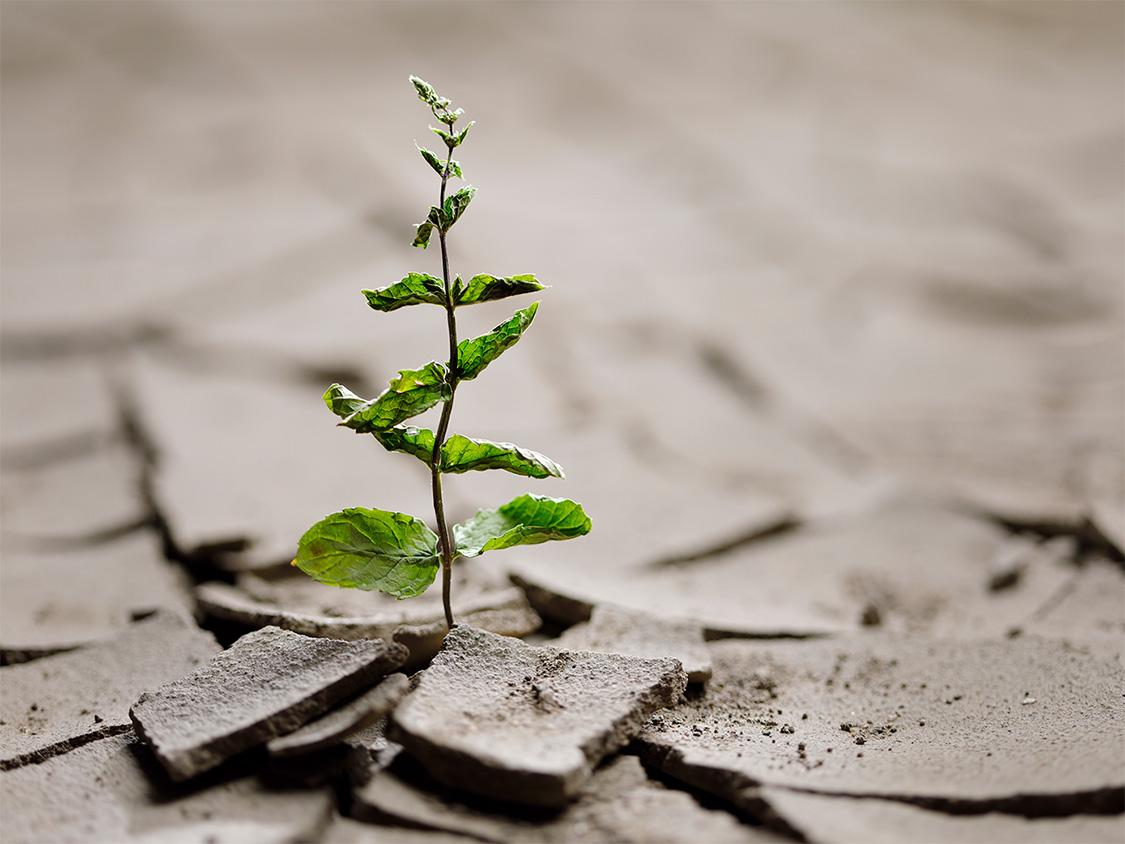
Photo credit: Ivan Bajic via iStock
“Another world is not only possible, she is on her way. On a quiet day, I can hear her breathing.”
Arundhati Roy
“We are already dreaming beyond this current moment, these crises, these norms. Dreams are the foundation for what we attempt to turn into reality.”
Adrienne Maree Brown
Some time ago I was part of a conversation on how to get finance to those who needed it most in the countries and frontline communities of the Global Majority - a term I prefer to the Global South because it is home to three-quarters of the world’s population. Our focus was on an issue few wanted to sully their hands with: Loss and Damage.
A vast spectrum of dodgy things went on in those years to divert focus from a political issue that few wanted to acknowledge, let alone address. Within the circle of colleagues I worked with, there were frequent conversations about how to get Loss and Damage recognised as the third pillar of climate action.
The Intergovernmental Panel on Climate Change had recognised that the limits to adaptation were already being breached in its very early assessments and, as such, that loss and damage was unavoidable. Yet, the pace of progress – or more accurately, lack thereof –, - of recognising and addressing the on the ground realities under and through the United Nations Framework Convention on Climate Change (UNFCCC) remained frighteningly slow and woefully inadequate. Decades behind the so-called best available science. More than a century and a half beyond the discovery of what burning fossil fuels could do to our planet.
“Dreaming, after all, is a form of planning.”
Gloria Steinem
I remember that day clearly, recall what I was wearing as I sat amongst a group of colleagues, listening intently. At that point, the Fund for Responding to Loss and Damage hadn’t yet been established. Even discussions on Loss and Damage finance were taboo. The Warsaw International Mechanism existed but there was very little focus on mobilising action and support, despite the fact that it was one of the Mechanism’s three functions.
In response to a proposal that had been tabled, one of my colleagues said, “We can’t do that. Our partners won’t accept it.” Translation: “We can’t bring this into negotiation rooms as wealthy countries in the Global North will immediately shoot it down. We need to be more realistic”.
My heart sank. Because “being realistic” meant pandering to the interests of the world’s richest countries. Those bearing historical responsibility for climate change yet refusing to mobilise finance in the quantity and quality needed by frontline communities and vulnerable countries in the Global Majority.
I struggled with that. Didn’t those countries understand their historical responsibilities? They had obligations inscribed in international treaties. Didn’t they feel a moral and ethical obligation to fulfill them?
As a Canadian of British descent, I feel the heaviness of the climate and colonial debts my countries owe lingering in my body. It carries the rage of how Indigenous Peoples are treated today on land my ancestors stole. So, naturally I struggled with the declaration that the countries most affected by climate change can’t ask to be addressed by those most responsible for it because of the power imbalances.
It’s a phenomenon that’s been compared to setting a house on fire with people inside and then turning your back as it burns. I could feel the rage in my body rising as I sat there listening. But what my colleague said was also very accurate. Because the power imbalances between Global North and the Global Majority were then and still are today very real.
“Every great dream begins with a dreamer.”
Sonia Sanchez
As a researcher, I became curious about negotiating tactics that could cut through the power imbalances. Before long, two pathways emerged before me. The first path was a journey on how to negotiate more effectively. That led me to the work of Chris Voss, a former FBI hostage negotiator. When I first discovered him, on this episode of the School of Greatness podcast, Voss had just written a book called Never Split the Difference: Negotiating as If Your Life Depended on It.
In the podcast he spoke about his career as a hostage negotiator and sprinkled a few of the tactics he used to bring hostages home safely. As I listened, what struck me most was what was at stake in those negotiations. Human lives. Futures and all that came with them. Voss and his colleagues couldn’t split the difference because what does that mean when a human life is at stake? No, they had to win the negotiation to ensure the hostages stayed alive and returned home safely. This wasn’t Getting to Yes, a well-known negotiation framework to help both sides get more of what they want. It was a new paradigm. Going into a negotiation with an intent to get everything you were negotiating for because too much was on the line to compromise.
“To achieve this goal, we need imagination. Poetry helps me to imagine freedom.”
Mariame Kaba
Yes, Voss had tools at his disposal. Years of training as a crisis negotiator in New York. But he also had something else. Something even more powerful: belief. Because to get an outcome that brings hostages home alive, surely Voss had to believe with everything he had that he and his colleagues would be successful. More similarities with climate negotiators. Both the tremendous burden the job comes with and in the importance of cultivating an unwavering belief in the best outcome. I read the book andl later took Voss’s Masterclass, both of which I highly recommend and remain a student of his work.
After my deep dive into Voss’s work, I began to cultivate a belief that things could be different. That power imbalance between Global North and South could be righted. That finance could be mobilised at the scope and scale of the needs. That people across the world could be connected. That we could all collaborate. Cooperate. Work towards a common goal: a better world for all.
That led me down the second path and into a rabbit hole I’ve yet to emerge from.
I was already very steeped in personal development and what I often called soul work. I listened to podcasts throughout the day. Went to workshops on the weekends. Joined cacao ceremonies. Went to retreats on my time off. I meditated. Visualised. Did breathwork. And certainly I’d been aware that I had some foundational limiting beliefs that were keeping me stuck in various ways. But with this new realisation, cultivating new beliefs became my mission. I kept doing soul work and doubled down on my mindset.
“If the imagination is to transcend and transform experience it has to question, to challenge, to conceive of alternatives.”
Adrienne Rich
When I founded the Climate Leadership Initiative and two years later, the Loss and Damage Collaboration, working on my mindset and cultivating new beliefs became even more important. I was now tasked with fundraising to sustain work that was serving hundreds and before long, thousands of people. The hard-working people who did that critical work needed to pay their bills. As the initiatives grew, the amount of money I had to raise to keep the lights on increased.
Five years ago, I began working with a mindset coach to transform my beliefs around funding. I realised that one of my core beliefs is that fundraising is hard, particularly for climate work and even more so for Loss and Damage. This shows up in many ways in the things I say and do and it’s something I still work on today.
I’ve written about my journey recovering from burnout and how it opened up something for me. But I’ve continued to carry some embarrassment around it. As a result, I’ve not spoken as openly as I could have about some of the true lessons that came out of that period. The things I’ve come to know as true. I worried that I wouldn’t be taken seriously in the climate policy space.
I found other outlets for expressing my yearning for more embodiment and sharing it with others. Two years ago I started training to be a women’s empowerment coach. I’ve seen how much tapping into the wisdom of the body and healing the wounds we carry within us - and yes, we all do have some trauma - can change lives. As my training progressed, I began to unlearn some of the things I’d been conditioned to believe. Yet, despite all this awareness, I still struggled with these two seemingly different sides of me.
The coach in training and the climate policy researcher.
The person who wears suits and heels and strives to be taken seriously in important meetings with the one who wants to howl at the moon.
Until now I’ve seen these two parts of myself as separate. But over the past year, those two parts of me have begun to merge in unexpected ways. I can no longer find myself as easily able to deny some parts of me in some spaces, and others in other spaces. And more importantly, I know that bringing my whole self into my work is essential to create bigger change in the world. And it’s true for you too.
“It always seems impossible until it’s done.”
Nelson Mandela
To create the world we want, we must connect to all parts of ourselves, to each other and the world around us. Because there is just one humanity. And the change we want to see in the world starts with us. It’s an inside job. That doesn’t mean the actions we take don’t have meaning and aren’t important. Of course they are. But we must do the internal work as well. To love and nourish ourselves. To cultivate beliefs about the world we want to live in while we do the things we can to make it better now.
We can be many things at once, Dear Reader. And we can hold many things at once. We are being called to hold the realities we see in the world around us while also cultivating beliefs to help us create a better world. To usher in a new era for planet Earth. One in which all humans, all other species and all ecosystems are thriving on a healthy planet.
Last week I went to an event convened by the Center for Earth Ethics and Columbia Climate School, which brought together spiritual leaders from across faiths. I had filled several pages of my notebook with insights and inspiring quotes by the time Bishop William J. Barber II, the founder and president of Repairers of the Breach, got up to speak.
Bishop Barber stood before a captive audience at a difficult moment for humanity. Yet, he cautioned us that though things may look bleak now, we cannot surrender to despair. And we need not do so. Because we have a guide, a wayfinder in the Earth itself, which he called a prophet. Our job is simple: listen to her. Bishop Barber said that yes, she is groaning but it is not the groaning of death - though many things will fall away in this transformation - but rather the groaning that comes with birth. He told us:
“The Earth is saying there is possibility beyond what we can see right now.”
In order to trust in those possibilities, we must believe that one of these possibilities is a world far greater than we could even imagine. That is the challenge before us. We must see the new world in our minds and believe that it’s possible before we see it emerge.
During London Climate Action Week, I attended an event on shaping narratives of a better future at Solutions House hosted. The event was facilitated by Solitaire Townsend, Chief Solutionist at Futerra, who herself is a masterful storyteller. At the end of the discussion, Townsend said something powerful that I still reflect on regularly: What if we’re at the juncture in the hero’s journey when the protagonist is faced with a challenge which they have to step up to meet, calling in powers they didn't know they had. They have to become someone they didn’t know they could be. Eventually they return home victorious and forever transformed.
What if this moment is our Call to Adventure? How will we meet this moment? Will we step up to the challenge of believing there are possibilities beyond what we can see with our eyes?
Humans have always used beliefs to reach beyond what they can see around them. Everything begins first in our imaginations. Albert Einstein famously used his imagination to conduct thought experiments. He is quoted as saying:
"Imagination is more important than knowledge. For knowledge is limited to all we now know and understand, while imagination embraces the entire world, and all there ever will be to know and understand.
Today, the Loss and Damage Collaboration is launching our I Believe . . . campaign because we believe that we can create a world in which every human, every species, and every ecosystem is thriving on a healthy planet. Through this campaign we plan to help cultivate a collective belief in that world and then work with you to create it
Our research on the mosaic of solutions for responding to loss and damage has shown that wealthy countries in the Global North could mobilise 6.6 trillion USD a year through tools like taxation. These countries are currently losing hundreds of billions a year in tax revenue. That money could be captured and put to far better use to make lives better in every corner of the world.
Our work on systems change goes one step further to show how we could stop loss and damage at its root. It’s not as far-fetched as you might think and it’s easier than you might imagine. Because the resources, the solutions, the knowledge and the wisdom needed to create a new world already exist in this one.
As June Jordan so eloquently wrote in Poem for South African Women, “We are the ones we’ve been waiting for.” We don’t have to wait for political will. We can be the change now. By seeing the world we want to create in our imaginations, believing it’s possible and then taking the actions we need to get there.
This moment is calling humanity to go inwards and step up. It’s our Call to Adventure. We plan to answer the call. And we hope you’ll join us.

Read the full text here:

Read the full text here:

Watch the video here:
Erin Roberts is the founder and executive director of the Loss and Damage Collaboration. She loves connecting people and ideas and is a student of conscious leadership and a women’s empowerment coach in training. She believes that we can create a world in which every human, every other species and every ecosystem is thriving on a healthy planet and looks forward to working with you to do just that.