
Publications
STATUS OF ECONOMIC LOSS AND DAMAGE CAUSED BY CLIMATE CHANGE IN NEPAL: PATTERNS, IMPACTS, AND POLICY IMPERATIVES
11/12/25
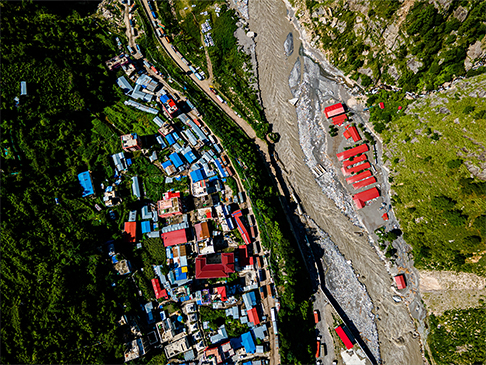
Aerial view of the Rasuwagadhi flood which destroyed the Friendship bridge, a road, a hydropower substation and swept away vehicles in Rasuwa, Nepal. Photo: AP Tolang / Shutterstock
Nepal, the fourth most climate-vulnerable country in the world, is experiencing increasing economic and non-economic losses from climate-induced disasters. This in-depth analysis of available data on climate change impacts in Nepal during the period 1971-2025 shows increasing trends in economic costs as well as non-economic impacts. Recent average annual economic losses stand at 0.08% of GDP (NPR 2.78 billion) with extreme years touching 2.08% of GDP. Physical property accounts for 75% of economic loss, followed by agriculture (18%), livestock (4%), and food storage (3%). Non-economic losses comprise an average of 647 deaths every year due to climate disasters, large-scale displacement, loss of cultural heritage, and ecosystem degradation. Future scenarios project economic losses to reach 2.2% of GDP by 2050 and 9.9% by 2100 in the absence of proper mitigation. The study identifies major gaps in loss and damage assessment capacity, weak financial mechanisms, and low recovery capacity of vulnerable communities.

Read the full text here:

Read the full text here:

Watch the video here: