
Publications
IMMOBILITY IN THE CONTEXT OF CLIMATE CHANGE
1/10/25
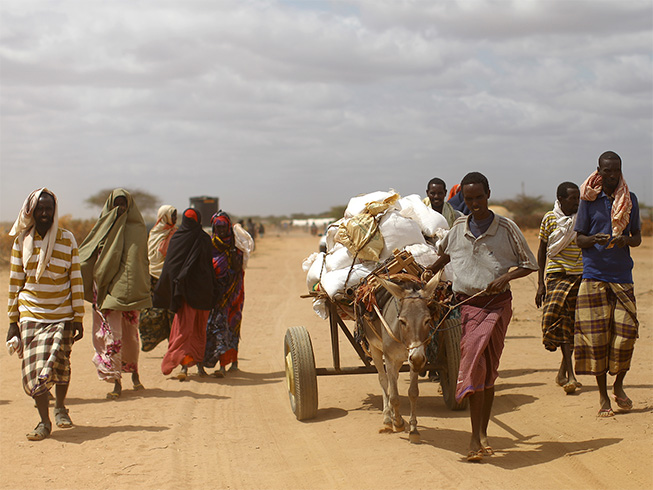
September 28, 2011 – Somali families leave their homes due to deadly drought to settle iin refugee camps. Photo credit: mehmet ali poyraz via Shutterstock
In the face of escalating climate risks and impacts, the majority of people will not be able to move, will choose not to move, or may perhaps temporarily move and return to their homes. Understanding immobility in the context of climate change is thus essential to support the development of equitable and effective adaptation strategies and the resilience of people and communities that remain in at-risk locations. In this review, we provide a critical assessment of the growing literature on immobility. We draw on a range of critical research case studies to explore how immobility is experienced in different geographical contexts, including Africa, South America, Europe, and small islands. We identify areas for much needed further research on immobility, including governance of immobility; further expansion on connections between immobility, justice, and loss and damage; and the feasibility of immobility as a response to increasing climate impacts and risks.

Read the full text here:

Read the full text here:

Watch the video here: