
Publications
CLIMATE CHANGE RISK AND LIVELIHOOD VULNERABILITY ASSESSMENT IN COASTAL COMMUNITIES IN TANGA AND PWANI REGIONS OF TANZANIA
4/12/25
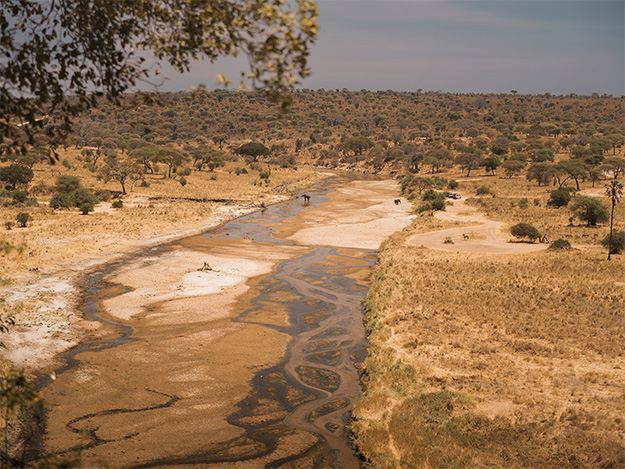
Elephants seeking refreshment in the Tarangire river amidst the dry savannah landscape of Tarangire National Park, Tanzania. Photo: larraend / Shutterstock
In addressing climate change challenges, adaptation remains a significant priority for Tanzania, including its coastal regions. This study assessed climate change risks and vulnerability using scientific and participatory approaches. Various methods were used, including key informant interviews, focus group discussions, structured household surveys, and geographical information systems. Livelihood Vulnerability Index, Livelihood Vulnerability Index-Intergovernmental Panel on Climate Change, and Livelihood Effect Index were used for the assessment of community vulnerability to climate change impacts. The findings for the three studied villages in Lushoto, Pangani, and Bagamoyo districts indicate that prolonged dry spells pose the most significant climate risks in Lushoto, followed by intermittent floods. Low crop yield and loss of livestock and income are serious risks due to drought in the village. The incidences of livestock diseases and pests are very limited (risk level 1.7, insignificant). However, damage to houses due to floods is a climate risk that needs serious attention. The findings of this study have highlighted potential areas of intervention to build community resilience to climate change impacts. Diversification beyond farming in Lushoto and Bagamoyo districts and fishing activity in Pangani district is an adaptive mechanism. Therefore, it is imperative to conduct in-depth studies to establish vulnerability to climate change from regional to national scales as a precursor for adaptation planning in Tanzania.

Read the full text here:

Read the full text here:

Watch the video here: