
Publications
Child-responsive Loss and Damage Policies, Finance and Action
Insights from case studies
17/12/25
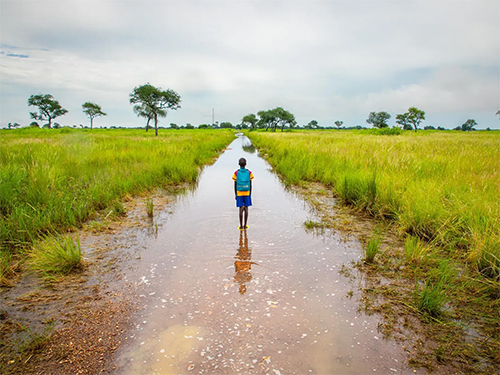
Photo: UNICEF/UNI640023/Raphael Poug
Climate-related losses and damages - including the loss of lives, destruction of homes, schools, and health services, disruption of livelihoods and social networks - pose a profound threat to children’s development, well-being, and rights. Children are particularly vulnerable to experiencing losses and damages due to their unique physiological and psychological characteristics, behavioural patterns, and dependence on caregivers. Yet, their experiences are often overlooked in climate policies, financing, and action.
This report draws on 13 case studies from diverse geographies, climate hazards, and socioeconomic contexts to highlight how children experience both economic and non-economic losses. The case studies document real-world approaches, lessons learned, and gaps in responding to slow- and sudden-onset events. They offer practical insights for designing child-responsive Loss and Damage policies, finance, and programmes including within the Fund for Responding to Loss and Damage (FRLD), the Santiago Network, and the Warsaw International Mechanism.
The report underscores the urgent need for holistic, flexible, and sustained approaches that place children at the center of decisions on climate-related loss and damage.

Read the full text here:

Read the full text here:

Watch the video here: